
If you are serious about building a skincare brand in 2026, you already know: your formula is only half the battle. The other half is who actually makes it—and whether that partner can protect your margins, your compliance, and your launch dates.
This guide is written for founders, sourcing managers, Amazon/DTC brand owners, spa & clinic owners, and distributors evaluating a skincare contract manufacturer or deciding between private label skin care manufacturers. We’ll break down what “contract manufacturing” really means versus private label skin care / private label skin care products, what separates the best private label skin care manufacturersfrom the rest, and how a skin care line manufacturer like Guangzhou Royax Cosmetics Co., Ltd fits into a smarter, lower-risk launch strategy.
1. Contract Manufacturing vs Private Label: stop using the terms interchangeably
Most search results mix them up; smart buyers don’t.
1A) Skincare contract manufacturer = you outsource production (often with your formula/IP), and the factory executes to spec
A true skin care contract manufacturer is a production & quality-system partner. You may bring:
● your own formula (or co-develop one),
● specific actives, textures, claims strategy,
● packaging mechanics (airless pump specs, tube diameters, glass weights, droppers, seals).
The factory provides: scale, validation, batch records, QC/QA, filling, labeling, packing, and export documentation.
Use this model when: you need control, exclusivity, and a defensible product architecture—not just a relabeled stock jar.
1B) Private label skin care / private label skin care products = faster launch using proven bases
With private label skin care, you typically start from pre-validated bases (cleanser bases, emulsion platforms, gel textures, serum vehicles) and customize within guardrails:
● active levels (vitamin C %, niacinamide %, etc.),
● fragrance/no-fragrance,
● preservative system fit,
● packaging & decoration (label, box, foil, emboss, QR/serialization if needed).
Many private label skincare companies call this “turnkey,” because the hardest parts (base stability, preservative efficacy, rheology) are already engineered. Great for speed to market, test batches, and proof-of-concept before you lock in a fully custom route.
Bottom line: the strongest brands treat private label skin care manufacturers as a launch engine, and a skincare contract manufacturer as a scale engine. You can absolutely use both in sequence.

2. Who should use a Skincare Contract Manufacturer (and who shouldn’t)
A skin care manufacture partner isn’t a magic wand. It’s infrastructure. Use it when:
● You want consistent batch-to-batch quality (not “samples looked great, production didn’t”).
● You need documented compliance (MSDS/SDS, COA, ingredient traceability, stability/micro testing).
● You plan to sell cross-border (US/FDA-region expectations, EU CPNP/responsible-person ecosystem, GCC labeling rules, etc.).
● You care about IP protection (NDA, formula ownership, restricted subcontracting).
● You must scale SKUs without reinventing the wheel every time.
You might notneed a full skincare contract manufacturer yet if:
● You just want “any jar with your logo” for a local gift shop run (white-label is fine there).
● You haven’t validated your audience or price point (start smaller, then graduate).
But once you’re building a skin care line, the question becomes: which of the private label skincare companies can actually deliver at scale without drama?

3. How to Evaluate Private Label Skin Care Manufacturers Like a Pro
If you’ve ever typed “best private label skin care manufacturers”into Google and felt overwhelmed, you’re not alone. Everyone claims “GMP,” “fast,” and “low MOQ.” Here’s the due-diligence checklist that actually predicts performance.
3.1 Ask for proof of quality systems (not slogans)
● Which standard? Look for ISO 22716 (cosmetics GMP) and documented SOPs.
● In-house lab or outsourced testing? You want in-house checks+ third-party micro/stability.
● Batch records: Can they show redacted examples of batch sheets, weighing records, and release docs?
● Ingredient traceability: COA for raw materials, allergen controls, heavy-metal monitoring, and preservation system validation.
Keyword note: you’re not just buying “private label skin care products”; you’re buying a quality system that protects your brand if a retailer, Amazon, or regulator asks hard questions.
3.2 Stress-test their “low MOQ” claims
A flexible skin care line manufacturer should be able to explain whyMOQs exist:
● Filling line setup & changeover time
● Component minimums (bottles/pumps/tubes)
● Emulsion batch size economics
● Decoration (label rolls, carton print runs)
What you want: scalable tiers, e.g.:
● Pilot / market-test batch: smaller run to prove sell-through
● Reorder batch: higher efficiency, better unit economics
● Annual volume ladder: clear price breaks so you’re not trapped
Many private label skin care manufacturers in Guangzhou ecosystems can offer very competitive entry sizes—ifyour packaging choices are realistic. The trap is choosing a fancy custom mold too early and killing your cash flow.
3.3 Lead times: ask for the realcalendar, not the sales calendar
A transparent skincare contract manufacturer will map:
1. Sampling & adjustment loop (3–10 days typical for label/pack mockups; longer if custom formula R&D)
2. Stability/micro plan (accelerated stability is common; full real-time is a longer commitment)
3. Component sourcing (pumps/bottles often dictate the clock)
4. Production & filling window
5. Final QC release + export packing
Typical ranges we see (healthy, realistic):
● Private label skin care using in-stock base + in-stock packaging: 15–30 days after artwork lock & deposit
● Custom formula / new base: 30–55 days depending on testing depth and component sourcing
If someone promises “10 days always,” press for details.
3.4 Export & compliance readiness
Ask explicitly:
● Do you provide SDS/MSDS, COA, and ingredient declaration formatted for our destination market?
● For EU: can you support CPNP notification and responsible-person documentation?
● For US: are formulas built with FDA cosmetic labeling rules in mind (and no drug-claim language)?
● For Middle East/Asia: can you issue certificate of origin, halal-friendly documentation if needed, and correct HS codes?
A seasoned skin care manufacture partner treats this as normal—not “extra credit.”
3.5 IP & confidentiality (non-negotiable)
You want:
● Mutual NDA before formula talk
● Clear clause: you own the final agreed formula / limited license for production only
● Controls on subcontracting (especially for filling/decoration)
This is where many “cheap” private label skincare companies create risk: loose IP habits = your “unique” serum showing up elsewhere.

4. The Royax Approach: Turnkey Private Label Skin Care Products + Contract Manufacturing
When brands search for a skincare contract manufacturer or compare private label skin care manufacturers, they usually need three things simultaneously:
1. A partner who can launch fast (private label skin care products route)
2. A partner who can customize deeper when the brand is ready (skin care contract manufacturer route)
3. A partner who can export reliably to multiple regions without friction
Guangzhou Royax Cosmetics Co., Ltd is set up exactly for that hybrid path.
4.1 Who we are (in plain English)
Based in Baiyun District, Guangzhou, China, Royax operates as a skin care line manufacturer and private label skincare company serving clients in 150+ countries. The model is straightforward:
● In-house production-focused mindset: mixing → filling → labeling → packing → export documentation
● R&D that respects boundaries: textures people enjoy, actives used at functional levels, preservative systems chosen for safety & climate resilience
● QC gates at incoming materials, in-process, and finished goods (so “batch #2 feels like batch #1”)
Website: www.royaxskincare.com
Contact: lancy@royaxcosmetics.com | WhatsApp/Tel: (+86) 18200874404
Address: Rm 3003, Floor 3, No. 1, Yi Heng Road, He Long Street, Baiyun District, Guangzhou, Guangdong, CN-China

4.2 Three engagement models (pick your risk level)
Model A – Private Label Skin Care (fastest go-to-market)
You choose from proven bases and finish them as private label skin care products:
● Hydrating / brightening serums (hyaluronic acid, niacinamide, vitamin C derivatives)
● Moisturizers & gel-creams (lightweight daily, barrier-repair richer creams)
● Gentle cleansers (low-irritation foaming or cream cleansers)
● Exfoliants (enzyme powders or scrubs like sugar/lip scrubs)
● Masks & treatments (clay masks, overnight masks, targeted treatments)
● SPF conceptually—always subject to regional claim/registration strategy
Royax supports free sample evaluation so you can feel texture, scent intensity, and compatibility with your packaging before committing.
Model B – Semi-Custom / Performance-Tuned
You keep the base stable, but we adjust:
● Active percentages within validated windows
● Fragrance profile (fragrance-free option available)
● Texture modifiers (slightly thicker/thinner, slip changes)
● Herbal/natural ingredient storytelling (botanical extracts, oils) without breaking preservative logic
This is where many private label skin care manufacturers earn their fee: controlled customization, not random “add anything.”
Model C – Contract Manufacturing / Custom Formulation (full skin care contract manufacturer mode)
You need a bespoke emulsion system, a multi-active complex, or strict texture patents; we move into:
● Prototype iterations
● Stability & compatibility testing (container interaction checks)
● Micro validation
● Scale-up to commercial batches
● Full documentation package for your markets
This is proper skin care manufacture: repeatable, documented, defendable.

5. Typical Timelines & Volume Scenarios (So You Can Plan Cash Flow)
Below are illustrativescenarios (actual dates depend on packaging lead time and testing depth):
|
Scenario |
What you’re doing |
Typical MOQ per SKU* |
Sample / Prep |
Production & QC |
Total (after deposit + artwork lock) |
|---|---|---|---|---|---|
|
PL serum starter |
Pick a proven serum base, choose bottle/pump from in-stock options, label only |
flexible low entry |
3–7 days sample ship |
15–25 days |
~3–4 weeks |
|
PL multi-SKU line |
3–5 SKUs (cleanser + cream + serum + mask) with unified visual system |
scalable tiers |
7–10 days for mockups & lab checks |
25–35 days |
~4–6 weeks |
|
Semi-custom tuning |
Adjust viscosity/fragrance/extract blend, keep base validated |
mid-low entry |
10–18 days R&D loop |
30–45 days |
~6–8 weeks |
|
Full custom / OEM contract |
New emulsion, claim strategy, compatibility tests, full docs |
higher (efficiency-based) |
20–40 days dev + testing |
45–60 days |
~8–12 weeks |
*MOQ depends on packaging choice more than “the cream.” Stock bottles = friendlier numbers; custom mold = bigger commitment.
Royax’s operational rhythm is built for 3–7 days sampling, and production deliveries often quoted in the 10–30 days window once samples & components are locked—one reason brands shortlist Royax among private label skin care manufacturers they’re willing to reorder from.

6. Compliance & Export: The Boring Stuff That Saves Your Brand
A modern skincare contract manufacturer should make compliance boringly normal:
● Ingredient declarations formatted to your market’s rules
● SDS / MSDS, COA per batch
● Support for CPNP workflows for EU, and correct FDA cosmetic labeling discipline for US
● Certificate of Origin, commercial invoice/packing list, Bills of Lading, and HS code guidance
● Allergen & restricted-substance awareness (EU Annexes, regional limits)
If your goal is to be counted among legitimateprivate label skincare companies—not just “fast pop-ups”—this paperwork is the difference between scalingand getting stuck at customs.


7. Category Playbook: What Actually Sells (and How a Skin Care Line Manufacturer Builds It)
7.1 Serums & Treatments (the margin heroes)
Private label skin care products often win or die at serum texture. Royax’s lab approach prioritizes:
● Non-tack feel (fast-absorbing, layering-friendly)
● Stable vitamin C derivative systems or niacinamide-based brightening
● Hyaluronic/hydration complexes with humectant balance
● Optional botanical extracts for “clean/green” storytelling
If you’re comparing best private label skin care manufacturers, ask each one: “Show me three serum swatches on skin—dry-down time, tack, and pill risk under sunscreen.”That test reveals more than a catalog does.
7.2 Moisturizers & Gel-Creams (the daily repurchase engine)
Great skin care manufacture here is about:
● Emulsion stability across temperature shocks (shipping matters)
● Comfortable skin feel (not “greasy,” not “watery”)
● Barrier-support oils/butters balanced with non-pore-clogging logic for combo skin
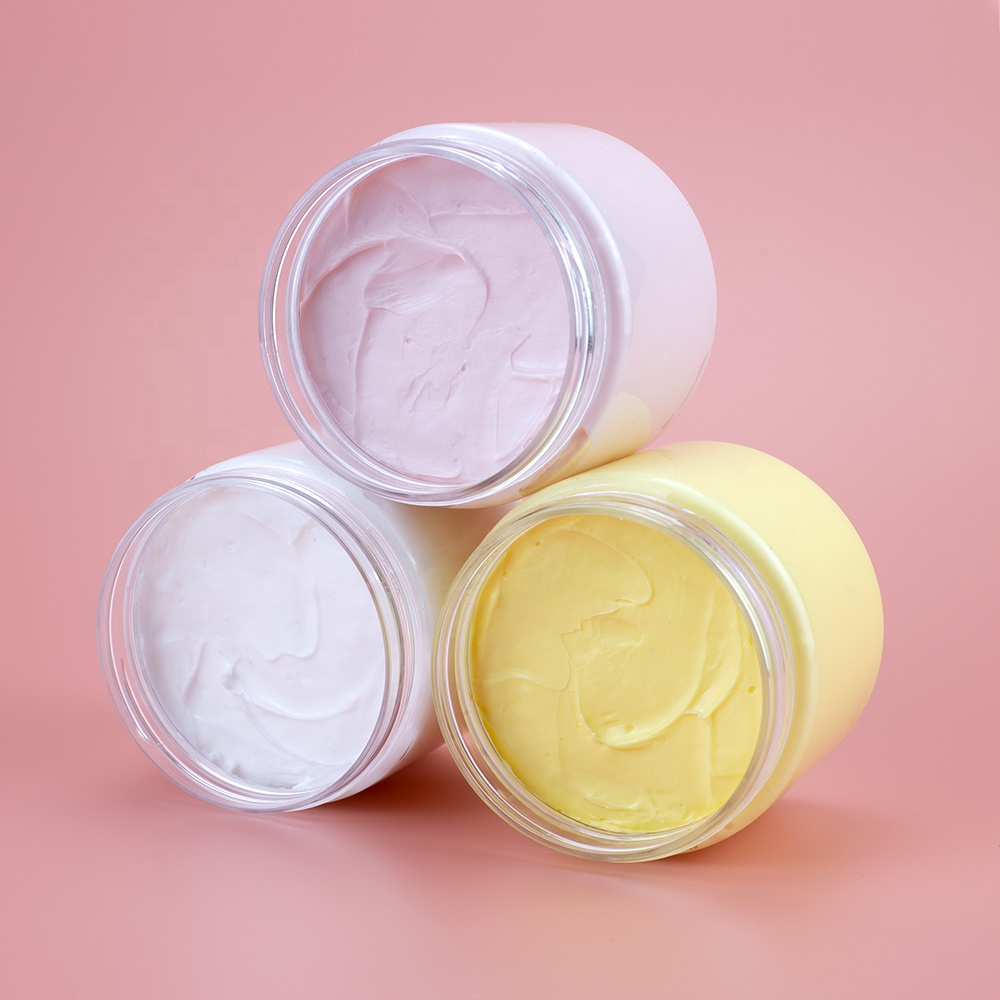
Royax supports lighter Asian-inspired gel-creams andricher whipped textures—so your skin care line can span climates.
7.3 Cleansers (where complaints start if done cheap)
Cleanser is where many private label skincare companies cut corners. We don’t. Expectations:
● Low-irritation surfactant systems
● Tight pH control where relevant
● Rinse feel (no film, no squeak)
● Compatibility with sensitized skin routines
7.4 Exfoliants & Lip Care (high-impulse add-ons)
Sugar lip scrubs, enzyme polishes, and gentle physical exfoliants are classic private label skin care upsells. Royax frequently produces lip scrubs with conditioning oils & butters—designed to feel “treat,” not “abrasive.”
7.5 SPF, Body Care & Men’s/Baby (if you’re building a wider line)
For body lotions, after-sun gels, and men’s simplified routines, a skin care line manufacturer should keep the architecture modular: fewer bases, more finishes, clearer costs.
SPF specifically is a regulated claim category in most markets—Royax will steer you toward the safest, most defensible path rather than letting marketing copy create regulatory debt.

8. Why Brands Shortlist Royax Among Private Label Skin Care Manufacturers & Skincare Contract Manufacturers
You don’t need “the biggest factory.” You need a partner who:
● ships samples fast so you can sellbefore you stock
● keeps batch consistency (lab + QC gates + records)
● speaks the export language (docs, packing, freight coordination)
● lets you start private label skin care products, then graduate to contract manufacturing without switching factories and re-qualifying everything
That’s the Royax lane.
Next step (low friction):
1. Pick 2–3 candidates you want to feel in real life (serum, cream, cleanser).
2. Email lancy@royaxcosmetics.com or WhatsApp (+86) 18200874404 with:
○ target market(s) (US? EU? GCC? AU?)
○ SKU list + desired price tier
○ packaging preference (airless pump / glass dropper / tube / jar)
3. Royax ships samples; you confirm texture/feel; then we plan the first batch.
Visit: www.royaxskincare.com
Address: Rm 3003, Floor 3, No. 1, Yi Heng Road, He Long Street, Baiyun District, Guangzhou, Guangdong, CN-China

Bonus: FAQ Mini-Block (great for SEO “People Also Ask” capturing)
Q: Is Royax a skincare contract manufacturer or a private label skin care manufacturer?
Both. Many brands start with private label skin care products for speed, then move into contract/OEM as volumes and IP needs grow.
Q: What MOQs do private label skin care manufacturers like Royax accept?
MOQ depends heavily on packaging. For many stock-component SKUs, entry batches are friendly; for custom molds, expect higher. Royax explains the “why,” so you can choose profitably.
Q: How fast can a skin care line manufacturer ship samples?
Typically 3–7 days to your door (varies by courier & destination). Production after approval often falls in the 10–30 days window.
Q: Will you sign an NDA before I share my idea?
Yes—standard practice for any credible skincare contract manufacturer or private label skincare companies you should trust.
If you want, I can now adapt this into:
● a WordPress-ready version with schema (Organization/Product/FAQ), or
● a shorter “city/region landing page” variant (e.g. “Private Label Skin Care Manufacturers Guangzhou – Export-Ready”) to target subcategories without cannibalizing
your main page. Just tell me which.
-Private Label Skin Care Products | Skin Care Products Manufacturer | Wholesale
-Top 10 Manufacturer & Low MOQ & Free Design & Competitive Price & Fast Shipping.
-Our Ingredients Are All Natural | Vegan | Organic | Cruelty-Free | Eco Friendly | Gluten Free | Paraben Free | Silicone Free | Sulfate Free
-Our Production Complies With EU And FDA Standards