
The clean beauty wave isn’t slowing down — it’s consolidating. In 2026, "natural" is no longer a nice-to-have claim; it’s the baseline for any new skin care line manufacturer hoping to win shelf space, Shopify conversions, or Amazon Best Seller badges. But between ingredient trends, regulatory landmines, MOQ traps, and the sheer noise of private label skincare companies waving low prices, knowing where to start (and who to trust) is harder than it looks.
This guide is built for brand founders, beauty buyers, and DTC operators who want more than a supplier list. We’ll walk through what “natural” actually means in formulation, how to vet a skin care manufacture partner without getting burned, why low-MOQ private label skin care is reshaping the entry barrier, and how Guangzhou Royax Cosmetics Co., Ltd fits into that picture as one of the best private label skin care manufacturers for founders who want speed, compliance, and room to grow.
Why "Natural Skin Care Private Label" Is the Most Competitive (and Lucrative) Corner of Beauty Right Now
Natural skincare isn’t a niche anymore — it’s a default consumer expectation. Gen Z and Millennial buyers read INCI lists. They ask about palm oil, silicone, synthetic fragrance, and animal testing before they ever check the price. For a new brand, that’s both a threat and an opening:
● The threat: if your formula looks like a chemical cocktail, you lose trust on TikTok in one scroll.
● The opening: most legacy brands are still retrofitting "clean" claims onto old formulas. A lean DTC brand built on private label skin care products can out-position
them with a tighter, ingredient-first story.
When you go the natural skin care private label route, you’re not inventing a factory from scratch — you’re partnering with a private label skin care manufacturer that already holds the certifications, the emulsion tanks, the stability-testing protocols, and the packaging supply chain. Your job becomes brand, community, and distribution. Theirs becomes making sure the jar doesn’t separate in a Miami warehouse.

What "Natural" Actually Means in Private Label Formulations
One of the first traps founders hit: "natural" isn’t a globally regulated term the way "organic" is (and even organic varies between USDA, EU EcoCert, and China’s own standard). When you’re talking to private label skincare companies, you’ll hear a spectrum:
1. Naturally derived – plant extracts, cold-pressed oils, botanical actives, but preserved with industry-accepted synthetics for safety.
2. Clean beauty – no parabens, no sulfates, no phthalates, no PEGs, often vegan.
3. Organic-certified – ingredients farmed under certified programs; much stricter, higher cost, narrower supplier pool.
4. "Greenwashed" natural – marketing says natural, INCI says otherwise.
A competent skin care line manufacturer will walk you through this spectrum instead of just nodding yes to everything. At Royax, for example, the formulation team works across aloe vera, turmeric, batana oil, castor-based lash serums, clay masks with plant extracts, and essential-oil-driven body lines — all naturally derived angles, all adjustable depending on whether you want mass-market clean or premium organic positioning.

How to Choose Among Private Label Skin Care Manufacturers (Without Regretting It in Month 4)
If you’ve Googled best private label skin care manufacturers, you’ve seen the pattern: every supplier claims low MOQ, fast delivery, free samples, and "10 years experience." So how do you actually tell who’s real?
Here’s the founder’s vetting checklist we recommend before signing an MOQ agreement with any private label skin care manufacturer:
1. Certifications That Match Your Sales Channels
If you’re selling on Amazon US, EU, or Sephora-style retailers, ISO 9001, ISO 14001, GMP, and FDA-registered facility status aren’t optional. Royax holds all four — and the certificate set is explicitly aligned with e-commerce platform requirements, which matters when Amazon asks for documentation during a listing review.
2. Low MOQ andScale-Up Headroom
Low MOQ gets you in the door. But what happens when you go from 300 units to 30,000? A lot of boutique workshops can’t scale without quality drift. You want a skin care manufacture partner whose floor is approachable (Royax supports low-MOQ private label) but whose ceiling includes bulk export runs for 150+ country clients.
3. Sample Protocol
"Free sample" means nothing if the sample formula changes between prototype and production. Ask: do they reformulate until you sign off? Royax’s workflow is sample → feedback → adjust → resampleuntil approval, then bulk. That loop is what keeps your first batch from smelling different than your Instagram photos.
4. Delivery Windows
In-season launches wait for no one. Royax quotes 3–7 days for samples, 10–30 days for bulk orders. That’s competitive for Guangzhou-based OEM/ODM, where the ingredient and packaging ecosystem is dense.
5. Formula Ownership & Customization
True private label skin care products sit on a spectrum:
● Stock formula + your label (fastest, cheapest)
● Tweaked formula (adjust fragrance, actives, texture)
● Full custom (your INCI from scratch)
The best private label skin care manufacturers don’t lock you into tier 1 forever. Royax supports all three — which matters if you start with a turmeric skin care set off-the-shelf and later want a proprietary retinol-hyaluronic hybrid serum.

Category Strategy: Where Natural Private Label Wins First
Most founders overcomplicate the SKU map. If you’re building with a skin care line manufacturer for the first time, the highest-ROI entry points in 2026 are:
Face Care (the anchor)
Facial serum, facial mask, toner, cleanser, cream. Vitamin C, hyaluronic acid, retinol, niacinamide — the "holy four" actives — all translate well into natural-leaning carriers (aloe base, plant glycerin, squalane). Royax’s face care catalog alone runs 57 SKUs, which tells you how modular this category is.
Body Care (the margin sleeper)
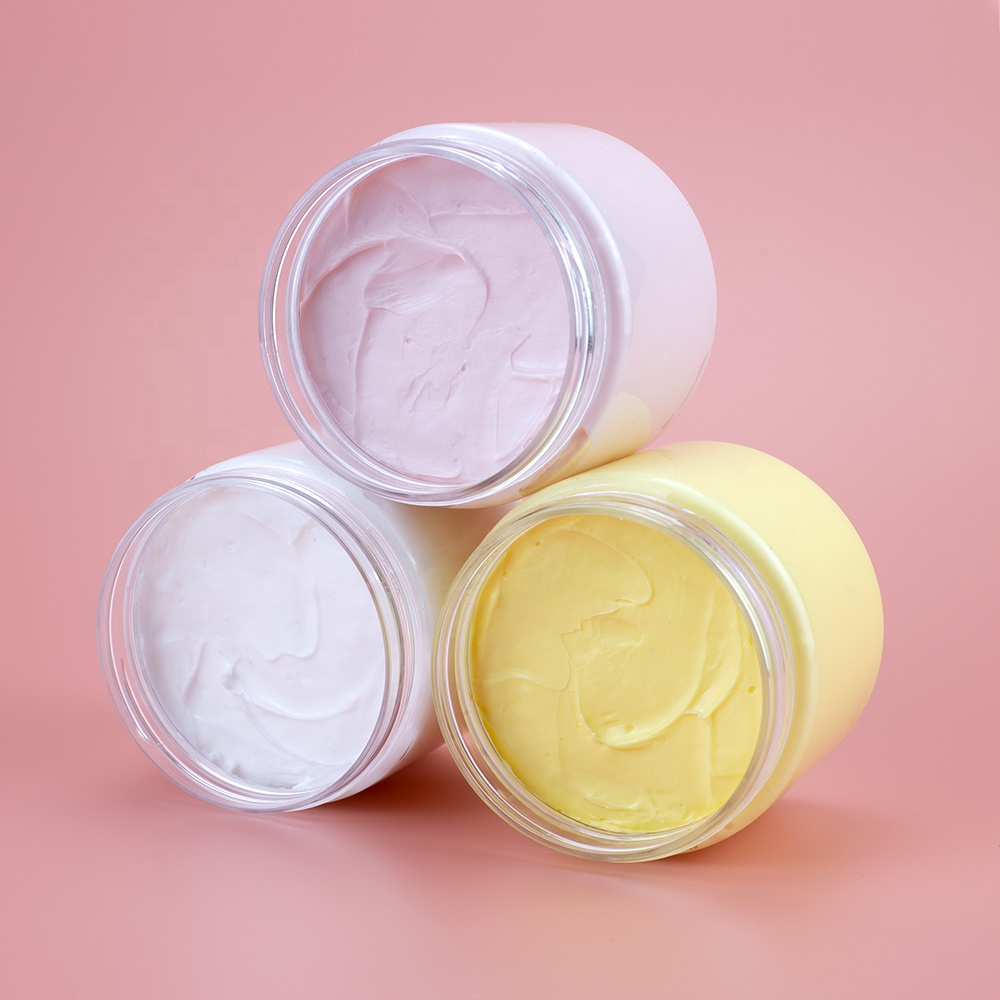
Body butter, body lotion, stretch mark cream, scrubs. "Skinification" of body care is real — consumers now want the same actives on their legs they put on their face. Private label body butter at 1.90–2.30 ex-factory leaves plenty of room for a 28–38 DTC price.
Lash & Brow (the viral hook)
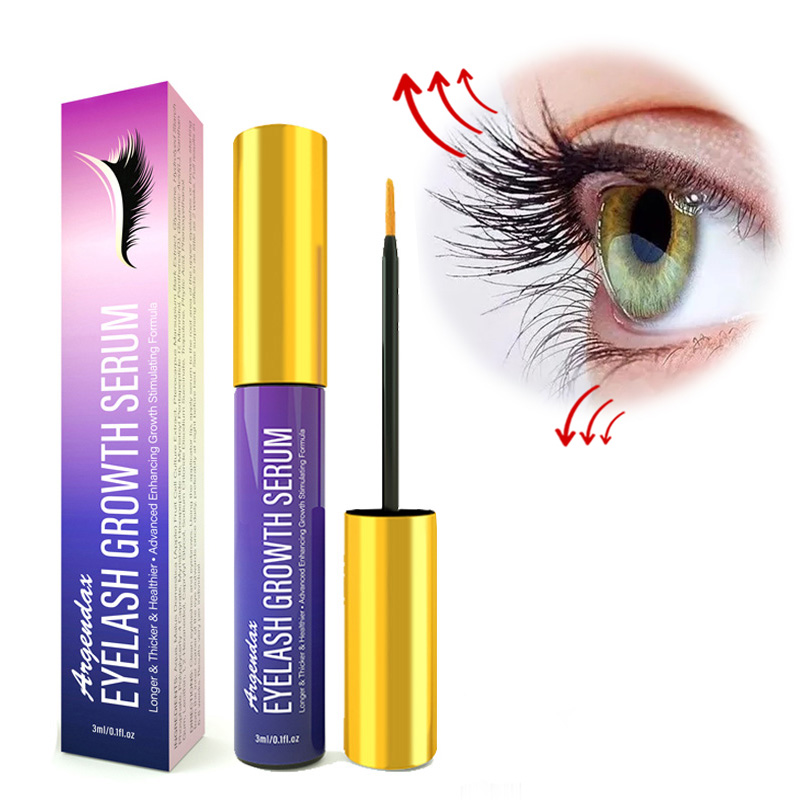
Eyelash growth serum is one of the most repeat-ordered categories in Royax’s export data. Castor-oil-based, naturally positioned, 1.28–2.88 ex-factory — easy to bundle as a "clean beauty starter."
Hair & Men’s (the gap markets)
Beard oil kits, batana oil, men’s dragon’s blood skin kits — these sub-niches have less competition than "face moisturizer" and higher giftability.

OEM, ODM, and Private Label: What’s the Difference (and Why It Matters for Your Google Search Intent)
If you landed here searching private label skin carevs skin care manufacture, the terminology can blur. Quick decode:
● Private label = factory’s existing formula, your brand, your packaging. Fastest launch.
● ODM = factory designs the formula concept, you pick and brand it. Slightly more custom than pure private label.
● OEM = you bring the formula/IP, factory makes it. Highest IP protection, slower setup.
When blogs rank for private label skincare companiesor best private label skin care manufacturers, they’re usually targeting founders who want door #1 or #2. That’s also where the MOQ wars happen. Royax positions itself across all three, but the site’s core traffic driver is low-MOQ private label — which matches where most first-time founders enter.

Compliance, Amazon, and the "FDA Registered" Signal
One underrated angle in the natural skin care private labelspace: regulatory alignment. The US doesn’t pre-approve cosmetics, but FDA registration + GMP + ISO is what lets you:
● List on Amazon without hiccups
● Respond to ingredient inquiries from distributors
● Sleep at night when a customer tags you on TikTok asking "is this safe?"
Royax’s cert stack (ISO9001, ISO14001, GMP, FDA) is explicitly mentioned as Amazon-aligned on their site — that’s not fluff, it’s a channel enabler. If your private label skin care manufacturer can’t produce those PDFs within 24 hours, keep looking.

Why Guangzhou Still Wins for Skin Care Manufacture
You’ll see private label skin care manufacturers in Korea, Italy, the US, and China. Each has a vibe:
● Korea = trend-leading, higher MOQ, pricier
● Italy = luxury positioning, small batches, Euro-centric lead times
● US = fast domestic shipping, high labor cost, fewer low-MOQ options
● China (Guangzhou) = ingredient + packaging cluster, fastest sampling cycle, lowest barrier to entry
Royax sits in Baiyun District, Guangzhou — the cosmetics manufacturing belt. That geography is why sample-to-bulk lead times stay short and why a skin care line manufacturer there can offer 1.78lashserumor2.99 batana oil without sacrificing GMP.

Royax as a Case Study: What "Best Private Label Skin Care Manufacturers" Actually Look Like in Practice
We’re not pretending this is a neutral directory piece. If you’re searching private label skincare companiesand landed here, you want to know what working with Royax feels like beyond the brochure.
Profile:
● Company: Guangzhou Royax Cosmetics Co., Ltd
● Experience: 10+ years OEM/ODM skin care
● Export: 150 countries
● Certs: ISO9001, ISO14001, GMP, FDA
● MOQ: Low-MOQ private label (exact number varies by SKU — inquiry-based)
● Sampling: 3–7 days, iterative until approval
● Bulk lead time: 10–30 days
● Product spread: face, body, hair, lash/brow, men’s, bath, makeup-adjacent, oral care
Signal vs Noise:
● ✅ Certs align with Amazon/e-commerce (not just "we have ISO" vagueness)
● ✅ Sample loop is explicit ("until you’re satisfied")
● ✅ Category breadth — you can build a 12-SKU line without switching factories
● ✅ Pricing transparency on key SKUs (1.28–2.88 lash serum, 1.90–2.30 body butter, 2.99–4.88 shampoo)
Where they’re not for you:
● If you need USDA/NOP organic certification out the gate, ask — naturally derived ≠ organic-certified.
● If you want 50-unit MOQ on complex emulsions, have the conversation — "low MOQ" is relative and formula-dependent.

Launch Timeline: From "I Have a Logo" to "Product on My Doorstep"
One of the questions private label skin care productssearchers ask most: how long does this take? Rough sketch with a Guangzhou skin care manufacture partner like Royax:
|
Phase |
Typical Duration |
|---|---|
|
Brand brief + SKU selection |
Day 1–3 |
|
Stock formula or custom tweak confirmation |
Day 4–7 |
|
Sampling (first round) |
Day 8–14 |
|
Feedback → resample (if needed) |
Day 15–21 |
|
Packaging mockup + label proof |
Parallel to sampling |
|
Bulk production |
Day 22–45 (depending on order size) |
|
QC + photos + shipping |
Day 46–55 |
That’s roughly 6–8 weeks door-to-door if you’re air-freighting, longer if sea. Compared to domestic US private label skin care manufacturers where sampling alone can be 3–4 weeks, the Guangzhou model compresses the loop.

Common Mistakes First-Time Founders Make with Private Label Skincare Companies
A few patterns we see repeatedly when brands switch to Royax after a bad first factory:
1. Chasing the absolute lowest unit price → leads to filler-heavy formulas and retention problems.
2. Ignoring shelf-life/stability testing → summer shipment melts your emulsion.
3. Over-SKU-ing → launching 14 products before you’ve sold 100 of one. Start with 3–5 hero SKUs.
4. Not locking formula ownership in writing → some private label skin care manufacturers will resell "your" tweaked formula to the next guy. Spell it out.
5. Assuming "natural" means "no preservative" → water-based products without preservatives = microbial lottery. A good skin care line manufacturer will push back
here, not just say "yes boss."

The 2026 Trend Layer: What to Brief Your Manufacturer On
If you want your natural skin care private label line to feel current rather than 2021, these are the brief angles Royax’s R&D team is seeing traction on:
● Turmeric + vitamin C (brightening, the Haldi resurgence)
● Batana oil (palm-derived, TikTok-driven hair/skin crossover)
● Centella / cica in clay masks and serums (barrier repair narrative)
● Refillable / minimal plastic packaging (EU-regulation nudge + Gen Z preference)
● Vegan lip scrubs (sugar + coconut + shea — Royax already runs this SKU)
● Men’s "dragon’s blood" kits (niche gifting, Amazon-friendly)
None of these require you to be a chemist — they require a private label skin care manufacturer whose catalog already touches those actives so you’re not paying for R&D from zero.

When "Best Private Label Skin Care Manufacturers" Isn’t About Who’s #1 on a Blog List
Google is full of "Top 10 Private Label Skincare Manufacturers in China" posts that are 80% affiliate, 20% recycled. The real "best" for youdepends on:
● Your order volume (are you 300 units or 30,000?)
● Your channel (Amazon FBA? Shopify? Offline spa?)
● Your formula ambition (stock natural, or patented active?)
● Your patience (do you need samples in 5 days or 15?)
If the answer is "smaller first run, natural-leaning, Amazon-aligned, fast sampling," the private label skincare companies that win that profile tend to be Guangzhou mid-size players with export history — which is exactly the Royax lane.

Getting a Quote Without Wasting Two Weeks
If you’re at the "okay I want to talk to a skin care manufacture partner" stage, the fastest way not to get ghosted by factories:
1. Tell them your target SKUs (e.g., "vitamin C serum + body butter + lip scrub")
2. Tell them your expected first order quantity per SKU
3. Tell them your channel (Amazon US? EU? Local retail?)
4. Ask for: stock formula sheet, MOQ per SKU, sample cost, bulk lead time, cert PDFs
Royax’s contact touchpoints (straight from their site, no forms-to-nothing):
📧 Email: lancy@royaxcosmetics.com
📱 WhatsApp / Tel: (+86) 18200874404
🏢 Address: Rm 3003, Floor 3, No. 1, Yi Heng Road, He Long Street, Baiyun District, Guangzhou, Guangdong, China
🌐 Website: www.royaxskincare.com
Mention you’re comparing private label skin care manufacturers and want to see the natural-skin-care catalog + sample policy — that gets you to the right person faster than "hello I want skincare."

Final Word: Private Label in 2026 Is a Speed Game, Not Just a Cost Game
The founders winning right now aren’t the ones who found the $0.10-cheaper jar. They’re the ones who:
● Picked a skin care line manufacturer that could sample in a week
● Launched 3 SKUs, not 13
● Positioned "natural" with actual ingredients, not just the word
● Used a private label skin care products model to de-risk inventory
● Switched to custom once retention proved out
Whether Royax ends up being your skin care manufacture partner or you use this guide to vet three others, the metric that matters is: can this factory get you from "idea" to "review on my listing" in two months without a formula disaster? If the answer’s yes, the rest is brand work.
And brand work? That’s the fun part.
This article is written for founders researching natural skin care private label and evaluating private label skincare companies. It references public information from Guangzhou Royax Cosmetics Co., Ltd (www.royaxskincare.com) and reflects the 2026 sourcing landscape as of publication.
-Private Label Skin Care Products | Skin Care Products Manufacturer | Wholesale
-Top 10 Manufacturer & Low MOQ & Free Design & Competitive Price & Fast Shipping.
-Our Ingredients Are All Natural | Vegan | Organic | Cruelty-Free | Eco Friendly | Gluten Free | Paraben Free | Silicone Free | Sulfate Free
-Our Production Complies With EU And FDA Standards